 Eugene Stitch
Berlin woolwork: where our patterns come from
Nearly all the patterns in our catalog are 19th-century Berlin woolwork charts. Here is what this embroidery was, who printed the charts and why you can stitch them for free.
A 19th-century fashion
Berlin woolwork is embroidery in wool on canvas from coloured charts printed in Berlin. The first charts appeared early in the 19th century, and until the 1870s the work was popular across Europe and America. The grid was printed in black on paper and then coloured by hand, square by square. It was worked in cross stitch or tent stitch.
Subjects
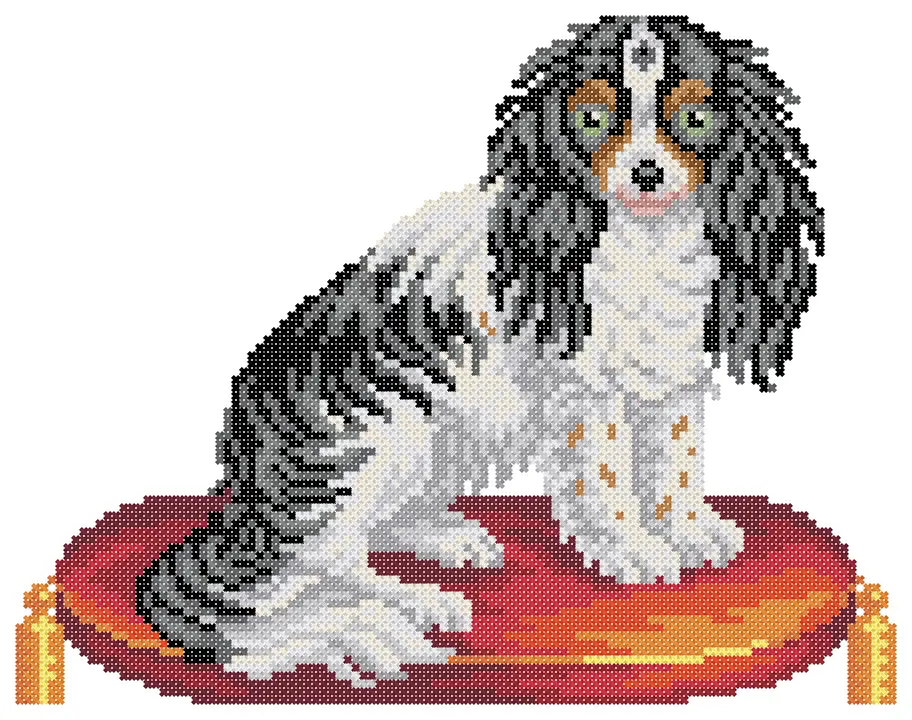
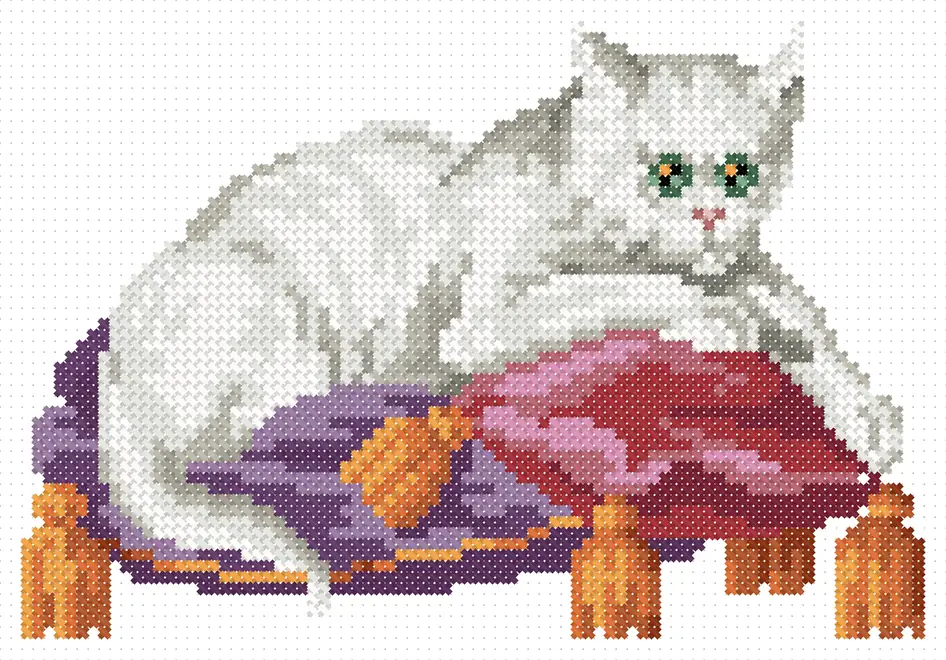
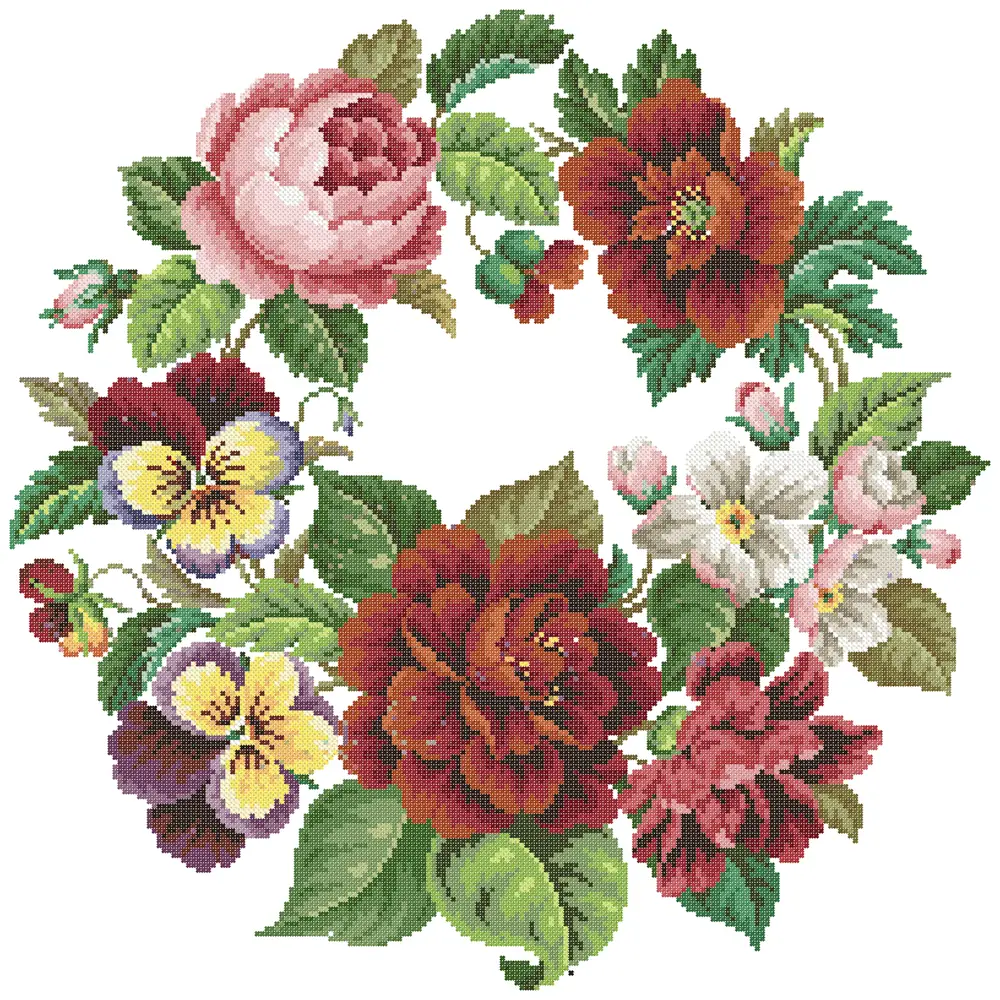
Flowers, bouquets and wreaths, birds, dogs and cats on cushions, forest and hunting scenes. You will find these subjects in our catalog too: King Charles spaniel on a cushion, White cat on cushions, Wreath of roses and pansies.
Publishers
The catalog includes sheets by the Berlin publishers Heinrich Kuehn, Hertz & Wegener, A. Todt and Th. Wilh. Meister, Louis Gluehr, L. W. Wittich, Bruno Borner and P. Trube, by the Paris house of Sajou, and pages from magazines: the French Moniteur des Dames et des Demoiselles and Journal des Demoiselles and the English Englishwoman’s Domestic Magazine. Where the publisher and sheet number are known, we give them on each pattern page.
Antique Pattern Library
The old sheets are scanned and kept by Antique Pattern Library, a non-profit project of New Media Arts, Inc. Its volunteers re-chart the sheets on a computer and match the colours to DMC threads, turning a wool chart into an ordinary pattern for stranded cotton. We transferred these charts cell for cell, with the threads from their keys.
Licence
Antique Pattern Library charts are shared under the CC BY-NC-SA 4.0 licence. You may stitch and share them for free with credit to the source, but not sell them, and changed versions must keep the same licence. That is why every pattern in the catalog is free and each page links to the original sheet.
Stitching them today
Berlin charts were made for wool, but they work just as well in stranded cotton on Aida. The large charts, up to 200 × 200 stitches, come to more than 14 in (36 cm) on 14-count Aida, so the small patterns are an easier start.